
OPEN FROM 9AM TO 5PM – CLOSED ON WEEKENDS
Choosing a Mipi Tft Display is not just a matter of comparing screen sizes or quoted prices. Buyers must also check interface compatibility, resolution, brightness, viewing angles, touch options, and long-term supply. A panel that looks crisp under showroom lights may appear washed out beside a sunlit factory window. Small details matter.
MIPI Alliance’s published interface specifications are a useful technical reference, though they do not certify every display module or supplier. One practical takeaway from that guidance is: “Verify the interface, timing, and system requirements before selecting a panel.” This is a buyer-focused paraphrase, not a direct quotation from a named individual. That distinction matters. Reliable sourcing should not dress editorial wording as an expert’s exact words.
This guide, “China Top 10 MIPI TFT Display Manufacturers for Buyers,” is designed to help readers compare suppliers with clearer questions. Look beyond catalog images. Ask for interface documentation, sample availability, operating-temperature data, customization limits, and realistic lead times. Request evidence for specifications, then test samples in the actual enclosure and lighting conditions. A glossy product page cannot reveal every integration problem.
Supplier rankings can be useful, but no shortlist is perfect. Company capabilities, component availability, and support can change. Buyers should confirm current details directly and assess each manufacturer against their own project requirements. The right choice is not always the lowest quote. It is the display and supplier combination that performs consistently, integrates cleanly, and can be supported after launch.
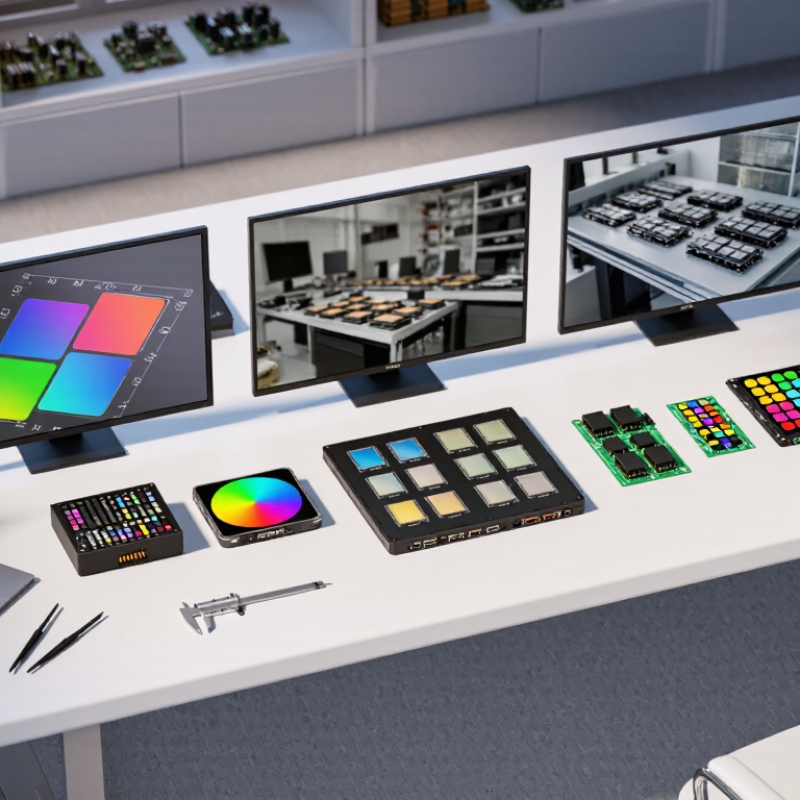
A MIPI TFT display combines a thin-film-transistor liquid-crystal panel with a serial interface, commonly MIPI DSI. The interface carries image data and control commands across high-speed lanes. Compared with many parallel connections, it can reduce pin count and simplify compact device layouts. That helps in handheld terminals, instruments, and embedded screens where board space is tight. A smaller footprint matters. But “MIPI” alone does not guarantee compatibility.
Buyers should match lane count, data rate, resolution, refresh rate, and pixel format to the host processor. A five-inch panel may appear suitable, yet its connector pinout or initialization sequence can differ. Check voltage rails, backlight current, operating temperature, and viewing direction before approving samples. Request timing tables and command documentation. Missing details can delay integration.
Image quality depends on more than resolution: brightness, contrast, color depth, response time, and viewing angles shape everyday use. For equipment used in sunlight, check readability under real lighting, not only against a datasheet. MIPI links support fast updates, but cable length, signal integrity, and software tuning still matter. A specification can look complete, yet an omitted reset delay may keep the first image from appearing. Test the full display assembly with the intended processor and enclosure.
A reliable evaluation starts with the display’s actual operating conditions, not a catalog image. Confirm screen size, resolution, brightness, viewing angle, and MIPI DSI lane configuration. Ask whether the proposed controller and host device have been tested together. Small interface mismatches can cause flicker, failed initialization, or extra engineering work.
Request a current datasheet, interface timing details, and clear information about connector and FPC options. Check how the manufacturer handles sample revisions and production consistency. Test a sample with your own hardware, including startup, image stability, and performance across expected temperatures. Test the sample. A brief bench check will not reveal every issue, but it can expose obvious ones early.
Quality evidence matters. Ask how incoming materials, display uniformity, and shipment inspection are documented, and whether reports can be tied to specific batches. Also assess technical response times and how changes are communicated. Details matter. Price and lead time deserve attention, yet neither proves long-term reliability. No checklist catches everything; real projects often uncover assumptions that seemed safe on paper. A practical supplier should discuss those uncertainties openly and provide verifiable answers rather than vague assurances.
Profiles of China’s top MIPI TFT display manufacturers are most useful when they show engineering fit, not just catalog breadth.
Compare panel sizes, native resolutions, MIPI lane options, and controller support. Ask for a current datasheet and a working sample. Small details matter. A 4.3-inch panel may fit the enclosure, yet its FPC tail could collide with a mounting post.
Across ten supplier profiles, look for strengths in standard modules, compact wearable screens, sunlight-readable panels, low-power designs, custom aspect ratios, integrated touch, extended-temperature parts, industrial lifecycle planning, rapid prototyping, and interface debugging. These are capability areas, not verified rankings. Confirm claims with test records, not sales descriptions. Request brightness readings, viewing-angle data, startup waveforms, and MIPI signal results for the actual module revision.
Experienced buyers also check sample consistency and change control. Compare multiple batches for long-running projects. Ask who handles firmware adjustments and how replacement panels are qualified. A profile may look strong on paper but offer limited documentation. That matters.
This comparison has limits: sourcing conditions shift, and one sample cannot prove years of stable supply. Clear technical answers still reveal a great deal.
Choosing among ten MIPI TFT display manufacturers requires more than comparing screen sizes and prices. Buyers should check each supplier’s experience with MIPI DSI integration, supported resolutions, brightness levels, and touch options. Ask for interface documentation and sample test results. These help confirm that a display works with the intended processor and operating environment. A bright screen may still perform poorly if its connector or timing requirements do not match the host system.
Product range and engineering support also matter. Some manufacturers offer standard modules in several sizes, while others handle custom FPC lengths, cover glass, or touch configurations. Compare sample availability, stated production lead times, and quality checks for dead pixels or backlight uniformity. Small details matter. Service should include clear answers to technical questions, practical guidance during evaluation, and a defined process for handling defects. Request a sample and test it under realistic conditions, such as low temperatures or prolonged operation, when relevant. A supplier’s response can reveal useful details, though one test cannot predict every production issue. Buyers may also overlook the time needed to validate a display in their own enclosure. That part is easy to underestimate.
Anonymous supplier capability profiles for initial sourcing comparison. Specifications below are representative screening ranges for commonly available MIPI TFT modules, not verified claims about individual manufacturers or specific products.
| Profile | Typical Product Focus | Common Display Size Range | Representative Resolution Range | MIPI Interface | Touch Options | Customization to Ask About | Sample and Production Planning | Buyer Verification Priorities |
|---|---|---|---|---|---|---|---|---|
| Profile 01 | Compact TFT modules for handheld instruments and embedded controls | About 1.0–3.5 inches | Commonly 240 × 320 to 480 × 800 pixels | MIPI DSI; lane count and timing depend on the selected panel and controller | Resistive or capacitive touch on selected models | FPC length and pinout, cover lens, brightness, and viewing direction | Confirm sample availability and production lead time for the exact configuration | Panel-controller compatibility, operating temperature, and lifecycle status |
| Profile 02 | Small-format displays for smart home devices and portable electronics | About 1.5–5.0 inches | Commonly 240 × 240 to 720 × 1280 pixels | MIPI DSI options are available across suitable module designs | Capacitive touch is commonly offered; confirm cover-glass construction | Cover-glass shape, printed borders, optical bonding, and connector orientation | Request a schedule separating engineering samples from repeat production | Touch performance, optical stack-up, and interface initialization requirements |
| Profile 03 | Mid-size displays for medical, measurement, and industrial equipment | About 3.5–7.0 inches | Commonly 480 × 800 to 1024 × 600 pixels | MIPI DSI support varies by resolution, refresh requirements, and module design | Capacitive touch; resistive touch may be available for glove or stylus use | Wide-temperature options, touch tuning, brightness, and mechanical mounting | Ask for pilot-build quantities, inspection plans, and replenishment lead times | Temperature range, uniformity, touch behavior, and documentation availability |
| Profile 04 | High-resolution compact displays for imaging and premium user interfaces | About 2.5–6.0 inches | Commonly 720 × 1280 to 1080 × 1920 pixels | Check lane count, data rate, timing, and host compatibility for each panel | Capacitive touch is common on integrated touch versions | Color tuning, cover lens, bonding, and brightness-bin requirements | High-resolution panels may require additional sample validation and qualification | Pixel-defect criteria, image quality, signal integrity, and supply continuity |
| Profile 05 | Wide-format displays for control panels and vehicle-related interfaces | About 4.0–10.1 inches | Commonly 800 × 480 to 1280 × 800 pixels | MIPI DSI is available on selected modules; confirm host-board requirements | Capacitive touch is typical on many interactive configurations | Anti-glare treatment, cover-glass shape, mounting, and extended-temperature options | Clarify tooling needs and validation time for custom mechanical designs | Environmental test scope, vibration requirements, and long-term availability |
| Profile 06 | Open-frame or panel-mount displays for industrial human-machine interfaces | About 5.0–12.1 inches | Commonly 800 × 480 to 1920 × 1080 pixels | Interface availability is model-specific; verify MIPI DSI before design selection | Touch and non-touch configurations may both be offered | Bezel, mounting brackets, front-surface treatment, and cable routing | Confirm assembly scope, packaging, and acceptance criteria for volume orders | Mechanical drawings, ingress-protection scope, and system-level thermal limits |
| Profile 07 | High-brightness modules for equipment used in bright indoor environments | About 3.5–10.1 inches | Commonly 480 × 800 to 1280 × 800 pixels | MIPI DSI support depends on the selected panel and backlight configuration | Optional capacitive touch; check performance through the chosen cover lens | Brightness selection, anti-reflection treatment, touch sensitivity, and bonding | Request measured samples and confirm brightness and uniformity tolerances | Brightness measurement conditions, power consumption, and thermal behavior |
| Profile 08 | Custom-shaped or mechanically constrained display assemblies | Commonly about 2.0–7.0 inches, subject to panel availability | Resolution depends on the available panel and required aspect ratio | Interface and timing must be matched to both the panel and host platform | Touch integration may be designed around the custom front surface | FPC routing, cutouts, cover lens, bonding, and assembly integration | Allow time for drawing review, prototypes, and design-change approval | Tooling ownership, revision control, dimensional tolerances, and change notices |
| Profile 09 | Display assemblies with touch, cover glass, and optical bonding | About 2.0–10.1 inches | Commonly 320 × 480 to 1920 × 1200 pixels | MIPI DSI availability should be confirmed for the complete display assembly | Capacitive touch is common; interface and controller details are configuration-specific | Bonding method, cover-glass finish, sensor layout, and touch firmware settings | Evaluate assembled samples, not only bare panels, before production approval | Optical quality, touch noise immunity, bonding inspection, and repair policy |
| Profile 10 | Engineering-led module sourcing for projects requiring design support | About 1.0–12.1 inches, subject to project and panel selection | Resolution and aspect ratio are selected for the application | Interface review should include lane configuration, timing, and initialization details | Touch integration may be available as an optional module configuration | Electrical review, FPC design, mechanical adaptation, and sample iteration | Agree on engineering milestones, sample quantities, and production ramp assumptions | Technical response process, change control, quality records, and component traceability |
Buyer note: This is an anonymized market-screening template, not a verified ranking or a manufacturer-specific product list. Confirm each requirement against the current datasheet, sample, drawings, and written quotation. Certifications, production capacity, lead times, and lifecycle commitments should be validated directly for the selected supplier and part number.
Selecting a MIPI TFT supplier starts with the display’s real operating requirements, not a broad product description. Confirm resolution, viewing direction, brightness, connector type, and the exact MIPI lane configuration. Ask whether touch functionality is included or supplied separately. Small details matter. A pinout mismatch can delay a prototype even when the screen appears suitable on paper.
Request a current datasheet, mechanical drawing, interface timing information, and sample units. Compare the documents with the hardware you receive, including connector positions and cable length. Ask how the supplier checks brightness, dead pixels, and performance across the stated temperature range. Ask for evidence. A polished specification sheet helps, but it cannot replace testing the actual unit in your device. Check sample behavior during startup, extended operation, and changes in brightness.
Discuss production lead times, minimum order quantities, and how component changes are communicated. Verify that the quoted model number matches the sample and the documents. For a critical project, request written confirmation of key specifications and an explanation of the supplier’s inspection process. Not every supplier will provide the same level of detail. That is useful information, though it may complicate a fair comparison. Keep a record of test results and unanswered questions before approving a larger order.

