

How to Choose a Car Paint Booth in 2026?
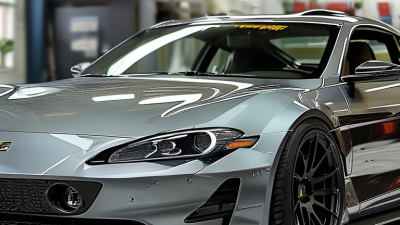
Choosing a car paint booth in 2026 is not simply a matter of comparing prices. It is a decision about airflow, finish quality, energy use, safety, and daily production. A booth may look impressive under showroom lights, yet perform poorly when filters load with overspray. That difference becomes obvious on a silver hood.
Dan Condon, a longtime paint-booth industry specialist, offers a practical reminder: “The right booth must fit the work, the workflow, and the facility—not just the vehicle.” His point deserves attention. A collision repair shop needs different capacity than a custom restoration workshop. Consider vehicle dimensions, booth size, door clearance, lighting, exhaust design, filter access, and curing requirements. Ask how quickly replacement parts can be supplied. Service delays can cost more than the original equipment.
In 2026, buyers should also examine documented airflow performance and energy consumption. Variable-speed fans may reduce operating costs, but only when the system maintains stable pressure. Poorly balanced airflow can create dust, uneven coverage, or excessive overspray. That is frustrating. It is also expensive.
Compliance must remain part of the selection process. Review applicable building, fire, electrical, and workplace requirements with qualified local professionals. Standards such as NFPA 33 may be relevant in the United States, but requirements vary by location. Do not treat a certification label as a complete evaluation.
The best car paint booth is not always the largest or most automated model. It is the booth that matches your workload, facility, technicians, and maintenance capability. Some purchasing assumptions may be wrong. Measure the real workflow before signing the order.
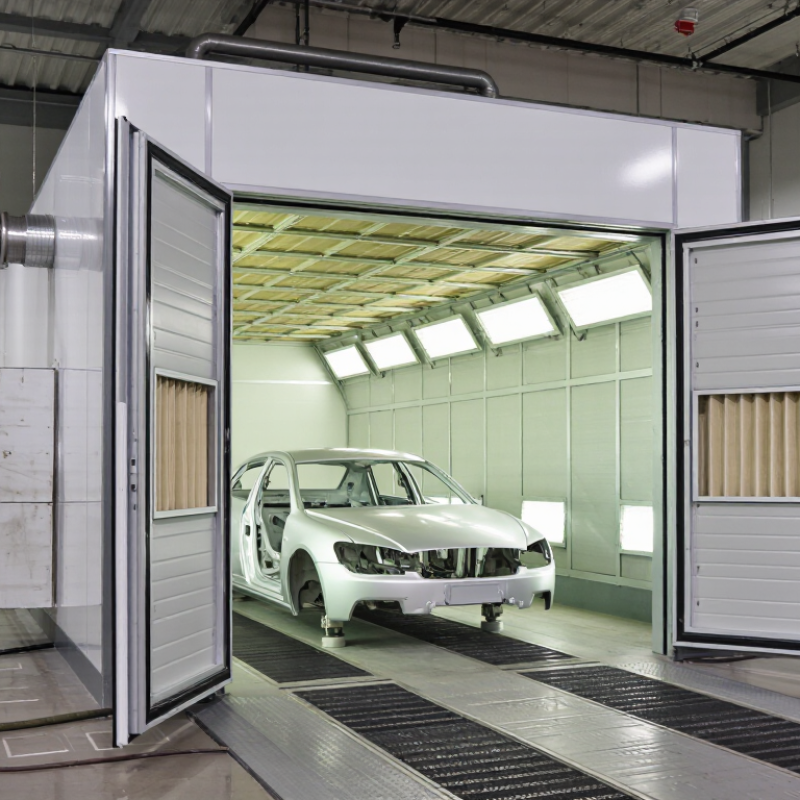
Classify Car Paint Booth Types by Capacity, Layout, and Repair Volume
How to Choose a Car Paint Booth in 2026?
Capacity should match the vehicles and panels entering your workshop. Compact booths suit spot repairs, bumpers, and single-door refinishing. Standard booths handle full cars with enough clearance for doors and spray movement. High-capacity booths support vans, larger vehicles, or several daily jobs. More space is not always better. An oversized booth may increase heating, filtration, and maintenance costs. Measure twice.
Layout affects workflow as much as booth size. A straight-through booth supports faster loading and unloading, especially in busy repair centers. A side-load layout can save floor space and suit workshops with restricted access. Enclosed designs offer better contamination control during detailed finishes. Check the distance around the vehicle, lighting position, airflow direction, and filter access. A tight doorway can turn a suitable booth into a daily frustration.
Repair volume should guide the final choice. Low-volume shops may need a flexible booth with simple controls and manageable operating costs. Medium-volume facilities benefit from faster curing, durable filters, and efficient vehicle movement. High-volume operations require consistent airflow, quick turnaround, and planned maintenance access. Calculate repairs per day, average booth time, and seasonal peaks before buying. A common mistake is trusting the busiest week alone. Real records are more reliable. Also review local installation requirements and worker safety procedures before commissioning the booth.
| Paint Booth Type | Vehicle Capacity | Typical Internal Size (L × W × H) |
Airflow Layout | Best Repair Scope | Recommended Daily Repair Volume | Typical Airflow Range | Main Selection Considerations |
|---|---|---|---|---|---|---|---|
| Compact Spot-Repair Booth | One small or medium passenger vehicle; normally one working position | 8–10 m × 4–5 m × 2.7–3.0 m | Crossdraft or compact side-downdraft | Bumpers, doors, fenders, localized refinishing, and small panels | 1–2 vehicles/day | Approximately 18,000–28,000 m³/h | Suitable where floor space and investment are limited. Confirm that the usable opening and exhaust system match the repair process. |
| Standard Crossdraft Booth | One passenger car or light commercial vehicle | 7–8 m × 4–4.5 m × 2.8–3.2 m | Air moves horizontally from intake filters to exhaust filters | Routine panel repairs and complete passenger-car refinishing | 2–4 vehicles/day | Approximately 20,000–35,000 m³/h | Usually has a lower installation cost, but airflow cleanliness can be less uniform than in downdraft designs. |
| Semi-Downdraft Booth | One passenger car | 7–8 m × 4–4.5 m × 2.8–3.2 m | Fresh air enters through the ceiling front section and exits through rear or lower exhaust areas | Mixed spot repairs and full-body refinishing | 2–4 vehicles/day | Approximately 22,000–36,000 m³/h | A practical compromise between crossdraft and full downdraft performance. Check filter loading and exhaust-plenum access. |
| Side-Downdraft Booth | One passenger car or light commercial vehicle | 7–8 m × 4–4.5 m × 2.8–3.2 m | Filtered air enters through the ceiling and travels downward toward side-wall exhaust plenums | Frequent complete refinishing with varied vehicle sizes | 3–5 vehicles/day | Approximately 24,000–40,000 m³/h | Provides consistent overspray control while generally requiring less pit construction than a full downdraft booth. |
| Full Downdraft Booth | One passenger car; one vehicle per cycle | 7–8 m × 4–4.5 m × 2.8–3.2 m | Filtered air enters across the full ceiling and moves vertically to a floor-level exhaust plenum | High-quality full-body repairs and premium finish work | 3–6 vehicles/day | Approximately 25,000–45,000 m³/h | Offers strong overspray removal and finish consistency. Requires adequate pit or raised-floor planning and careful exhaust balancing. |
| Drive-Through Booth | One large vehicle or two compact vehicles in a long bay, depending on the design | 12–18 m × 4.5–5.5 m × 2.8–3.5 m | Crossdraft, semi-downdraft, or downdraft configuration with doors at both ends | Continuous workflow, fleet vehicles, and shops requiring fast loading and unloading | 4–8 vehicles/day | Approximately 35,000–65,000 m³/h | Reduces vehicle reversing and handling time. Requires sufficient building length, traffic control, and coordinated curing or staging space. |
| High-Capacity Commercial Vehicle Booth | One large van, SUV, minibus, or light truck | 12–18 m × 5–6 m × 4–5 m | Usually side-downdraft or downdraft with increased exhaust capacity | Large vehicles, tall bodies, commercial fleet repairs, and oversized panels | 2–5 vehicles/day | Approximately 45,000–80,000 m³/h | Prioritize door height, vehicle clearance, heating capacity, filter area, and local regulations for larger exhaust volumes. |
| Multi-Stage Booth and Prep-Bay Layout | One vehicle in the spray booth plus one or more vehicles in preparation areas | Booth: 7–8 m × 4–4.5 m × 2.8–3.2 m; total layout depends on the number of prep bays | Dedicated spray booth combined with separately ventilated preparation zones | Shops handling disassembly, sanding, masking, painting, and curing as a continuous process | 5–10 vehicles/day | Spray booth: approximately 25,000–45,000 m³/h; prep bays require separate ventilation | Best for higher throughput. The preparation areas must not be treated as a substitute for a compliant spray booth or separate exhaust system. |
Related Posts
-
What Is the Best China Auto Paint Booth for Global Buyers?
-
How to Choose the Best Automotive Paint Booth?
-
How to Choose an Auto Paint Booth for Your Business?
-
Best Car Paint Booth for Global Buyers in 2026?
-
What Is an Automotive Paint Booth and How Does It Work?
-

5 Essential Tips for Choosing the Perfect Small Paint Booth for Your Needs
