
OPEN FROM 9AM TO 5PM – CLOSED ON WEEKENDS
China has become a significant manufacturing base for converting and packaging equipment. Its Die Cutting Machine manufacturers serve paper, carton, label, leather, foam, and flexible material industries. Choosing among them requires more than comparing prices or machine photographs.
This guide examines ten leading Chinese manufacturers through practical purchasing criteria. These criteria include machine structure, cutting accuracy, production speed, automation, material compatibility, safety design, and after-sales support. Factory experience also matters. A supplier with years of installation records may understand real production problems better than a company with impressive brochures.
We consider evidence such as product specifications, certifications, export experience, customer feedback, and technical documentation. Where possible, buyers should request sample cutting tests. A clean edge on a printed carton does not guarantee stable performance during a long production shift. That detail is easy to miss.
The selected companies may differ widely in scale, specialization, and service capacity. Some focus on flatbed systems, while others develop rotary or fully automated solutions. Their strengths may suit different production environments. A small converter may value flexible tooling and quick support, while a large packaging plant may prioritize speed and line integration.
No ranking remains perfect forever. Product models, ownership structures, and service networks can change. Buyers should verify current information directly with each manufacturer before signing a contract. Ask about spare parts, operator training, installation methods, warranty limits, and response times.
The goal is practical guidance, not a promotional list. With careful comparison, businesses can identify a Die Cutting Machine supplier that matches their materials, workload, budget, and long-term production plans.
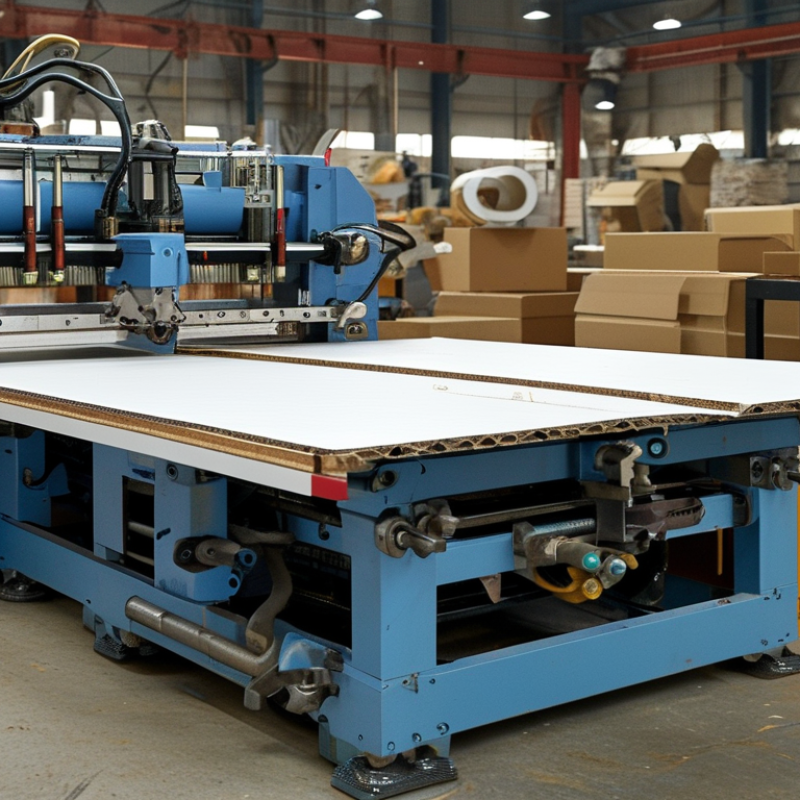
China Top 10 Die Cutting Machine Manufacturers
A die cutting machine shapes materials with a custom-made die. It can cut paper, cardboard, labels, foam, film, and thin rubber sheets. The process resembles using a very precise cookie cutter, but with controlled industrial pressure.
The operator places material on a feeding table or continuous roll. Rollers guide it toward the cutting station. A flatbed machine presses the die downward, while a rotary machine uses a cylindrical die for faster production. Depending on the tooling, one pass may cut, crease, emboss, or perforate the material. Sensors check alignment, pressure, and feeding speed. Incorrect settings can cause ragged edges, incomplete cuts, or wasted sheets. Even experienced operators must test samples because material thickness can vary slightly.
Tips: Check the die condition before production. Keep the cutting surface clean. Start with low pressure and increase it carefully. Measure several finished pieces, not just one. A setting that worked yesterday may fail today. Record successful adjustments, but review them when materials or humidity change. Never ignore unusual noise or uneven feeding. Small warning signs often become expensive defects. Good operators rely on both machine data and physical inspection.
Die cutting machines use a shaped steel rule, rotary die, or engraved cylinder to cut, crease, perforate, or emboss materials into consistent shapes. The chart shows representative thickness ranges of common substrates processed by die cutting equipment. Actual capability depends on the machine structure, cutting force, tooling, material density, and production settings.
Market data should guide the shortlist, not replace factory verification. Grand View Research estimates the global packaging machinery market will expand steadily through 2030, driven by flexible packaging and e-commerce. This growth increases demand for accurate, high-speed die cutting equipment. Buyers should inspect cutting tolerance, register accuracy, stroke stability, and material waste. Ask for measured results on similar substrates, not brochure claims. A practical trial should include paperboard, film, adhesive labels, and recycled stock.
Reliability is measurable. Request uptime records, maintenance logs, spare-parts lead times, and documented acceptance tests. A machine running at 8,000 sheets per hour means little if changeovers consume half a shift. Smithers’ packaging industry research highlights automation, lightweight materials, and sustainability as major technology pressures. Therefore, evaluate servo control, energy consumption, scrap collection, and quick tooling changes. Check whether operators can adjust pressure without excessive manual intervention.
Look beyond certification logos. ISO 9001 supports process control, but it does not guarantee cutting performance. Review calibration records, electrical safety files, software support, and traceability for critical components. Visit the production line when possible. Watch an actual setup. Speak with service engineers, not only sales staff. A weakness remains: public performance data is often inconsistent across suppliers. Buyers should record their own test results, compare total ownership cost, and keep contractual remedies specific.
Profiles of China’s Top 10 Die Cutting Machine Manufacturers
This profile examines ten leading Chinese manufacturers through production experience, machine specialization, export capability, and after-sales support. The selection should not rely on advertising alone. Factory audits, installed-machine records, and spare-parts response times provide stronger evidence.
The group covers several practical categories. Some manufacturers focus on flatbed systems for folding cartons and corrugated sheets. Others develop rotary equipment for labels, flexible packaging, and high-volume production. Several offer laser-assisted cutting, foil stamping, stripping, or inline inspection. Their technical strengths differ noticeably. One supplier may deliver fast setup, while another provides better registration stability. A few specialize in customized feeding systems. Others remain stronger in standard models and shorter lead times.
Grand View Research valued the global packaging machinery market at about 52.83 billion US dollars in 2023. It also projected a 5.7% compound annual growth rate from 2024 to 2030. This demand increases pressure on Chinese manufacturers to improve automation, energy use, and digital monitoring. In practice, buyers should test 0.1 to 0.2 millimeter registration claims using their own board or film. Request a continuous eight-hour trial. Short demonstrations can hide heat buildup, waste, or unstable feeding. Smithers also reports sustained growth in print packaging demand, supporting investment in efficient converting equipment. Still, the ranking is not absolute. A polished brochure is not proof. Regional service quality can matter more than a slightly lower purchase price.
Application determines practical value. A carton converter may prioritize stable registration, fast tooling changes, and clean stripping. An electronics supplier may need precise cutting for adhesive films, gaskets, or insulation sheets. Production capability also includes maximum material size, feeding accuracy, operating speed, uptime, and maintenance response.
Request a documented sample trial using your own materials. Measure edge quality, waste, changeover time, and repeated accuracy. I would not trust one successful sample alone. Real production is less forgiving.
Tips: Ask for cycle-time data after die changes. Inspect finished parts under bright, angled light. Confirm spare-part availability and operator training. Compare warranty terms carefully. A slightly slower machine may deliver better long-term consistency and fewer rejected batches.
Choosing a Chinese die cutting machine supplier requires more than comparing quotations. Smithers’ 2024 packaging outlook forecasts global packaging print to exceed US$500 billion by 2028. That growth raises pressure on speed, repeatability, and technical support. Ask for recent production samples using your actual material. Check cutting depth, waste levels, registration accuracy, and changeover time. A factory video is useful, but an audited visit is stronger evidence. Review ISO 9001 records, inspection procedures, spare-parts access, and operator training. Certification helps, but it never replaces machine testing.
Tips: Request a written tolerance range. Confirm the test material, blade type, speed, and inspection method. Compare total ownership cost, not only the machine price. Include installation, software updates, maintenance, and delivery time. Also ask for three customer references from similar applications. Their feedback may reveal slow responses that brochures hide.
A capable supplier should explain limitations clearly. That matters. I would distrust claims of zero waste or perfect accuracy. Real production changes with humidity, board thickness, and operator skill. Check whether the supplier records serial numbers for critical parts. Ask how quickly engineers respond across time zones. The 2023 ISO Survey shows ISO 9001 remains widely adopted worldwide, yet a certificate alone cannot prove die-cutting performance. My checklist is not perfect, either. A monitored trial run often exposes assumptions before they become expensive problems.
Anonymous supplier comparison based on common machine configurations, technical capabilities, compliance documentation, and purchasing considerations.
| Ranking | Anonymous Supplier Profile | Primary Machine Type | Typical Maximum Sheet Size | Typical Cutting Force | Typical Operating Speed | Suitable Materials | Automation Features | Documents to Request | Best Selection Scenario |
|---|---|---|---|---|---|---|---|---|---|
| 1 | Profile A | Automatic flatbed die cutter | Approximately 1,050 × 750 mm | Up to approximately 300 tons | Up to approximately 7,000 sheets/hour | Paperboard, corrugated board, labels, folding cartons | Automatic feeding, stripping, waste removal, touchscreen control | Machine specification, CE documentation, electrical drawings, test report | High-volume packaging production requiring consistent registration |
| 2 | Profile B | Semi-automatic platen die cutter | Approximately 1,020 × 720 mm | Approximately 150–250 tons | Approximately 2,000–4,500 sheets/hour | Paper, paperboard, corrugated board, PVC sheets | Semi-automatic feeding, pressure adjustment, fault alarms | User manual, spare-parts list, CE declaration where applicable, warranty terms | Medium-volume operations seeking lower equipment investment |
| 3 | Profile C | Rotary die cutting machine | Web width of approximately 300–1,300 mm | Pressure depends on cylinder configuration | Approximately 50–200 m/min | Self-adhesive labels, films, laminates, flexible packaging materials | Web guiding, servo registration, waste rewinding, inspection options | Web-path drawing, material compatibility data, control-system details | Continuous-roll label and narrow-web converting applications |
| 4 | Profile D | Digital finishing die cutter | Approximately 700 × 500 mm | Approximately 1–2 tons of cutting force | Speed varies by design and material thickness | Digitally printed paperboard, synthetic paper, labels, prototypes | Camera registration, CAD workflow, tool-free or quick-change setup | Software compatibility list, sample approval, calibration procedure | Short runs, sampling, customized packaging, and variable-data work |
| 5 | Profile E | Hydraulic cutting press | Approximately 1,600 × 800 mm working area | Approximately 20–400 tons | Stroke and cycle speed depend on configuration | Foam, rubber, leather, textiles, gaskets, insulation materials | Programmable stroke, dual-hand safety controls, automatic lubrication options | Hydraulic schematic, safety assessment, pressure test record | Industrial materials that require high force rather than high sheet speed |
| 6 | Profile F | High-speed sheet-fed die cutter | Approximately 1,060 × 760 mm | Approximately 250–350 tons | Approximately 5,000–8,000 sheets/hour | Folding cartons, commercial print, coated paperboard | Non-stop feeding, automatic pile change, waste stripping, servo control | Factory acceptance test, production-speed test, maintenance schedule | Large-volume commercial packaging with strict productivity targets |
| 7 | Profile G | Rotary label die cutter with slitting | Web width of approximately 250–600 mm | Rotary magnetic-cylinder or solid-cylinder format | Approximately 30–150 m/min | Paper labels, film labels, adhesive stock | Slitting, rewinding, laminating, waste matrix removal | Tooling dimensions, substrate test results, line-layout drawing | Label converters needing integrated finishing in a compact footprint |
| 8 | Profile H | Special-purpose foam and gasket cutter | Approximately 1,600 × 1,000 mm working area | Approximately 30–200 tons | Approximately 20–60 cycles/minute | EVA foam, rubber, felt, cork, sponge, sealing materials | Automatic indexing, programmable cutting depth, multi-tool layouts | Material trial report, blade specification, cutting-tolerance data | Automotive, electronics, appliance, and industrial component parts |
| 9 | Profile I | Compact automatic platen cutter | Approximately 750 × 520 mm | Approximately 80–160 tons | Approximately 1,500–3,500 sheets/hour | Paperboard, cartons, tags, cards, thin plastic sheets | Automatic feeding, die-height adjustment, counter and safety sensors | Machine layout, spare-parts availability, operator-training plan | Small and medium businesses with limited floor space |
| 10 | Profile J | Custom integrated die-cutting line | Configured according to product and line layout | Specified according to substrate and tooling | Specified according to process and material | Paper, film, foam, foil, laminates, and composite materials | Feeding, printing, laminating, die cutting, inspection, slitting, rewinding | Complete technical proposal, risk assessment, FAT/SAT protocol, service agreement | Complex projects requiring customized engineering and line integration |

