
OPEN FROM 9AM TO 5PM – CLOSED ON WEEKENDS
China’s city plazas are becoming lively stages for water, light, music, and public life. The best City Plaza Fountains do more than attract visitors. They shape movement, create cooling mist, and give ordinary evenings a memorable focus. Some stand beside historic streets. Others rise among glass towers and wide stone pavements.
Mark Fuller, founder of WET Design and a respected water-feature designer, once said, “Water is the most powerful element in design.” His words explain why a fountain can change an entire plaza. A well-planned installation reflects surrounding architecture, manages crowd movement, and remains inviting without becoming visually aggressive. In China, designers often combine choreographed jets, colored lighting, digital controls, and culturally familiar forms. The result can feel grand, but scale alone does not guarantee quality.
Details matter. Visitors notice whether the spray reaches nearby benches, whether the paving becomes slippery, and whether the sound remains comfortable after several minutes. Maintenance matters even more. Clear water, reliable pumps, discreet drainage, and accessible controls support a fountain’s real performance. Some projects look spectacular during opening ceremonies but feel less successful during quiet weekday afternoons. That weakness deserves attention.
This guide examines notable Chinese plaza fountains through design, engineering, atmosphere, safety, and visitor experience. It considers how each project serves its location, not merely how high its jets rise. The ranking may remain partly subjective. Beauty depends on weather, crowds, music, and personal memory. Still, these examples reveal what makes City Plaza Fountains effective, durable, and genuinely valuable to urban communities.
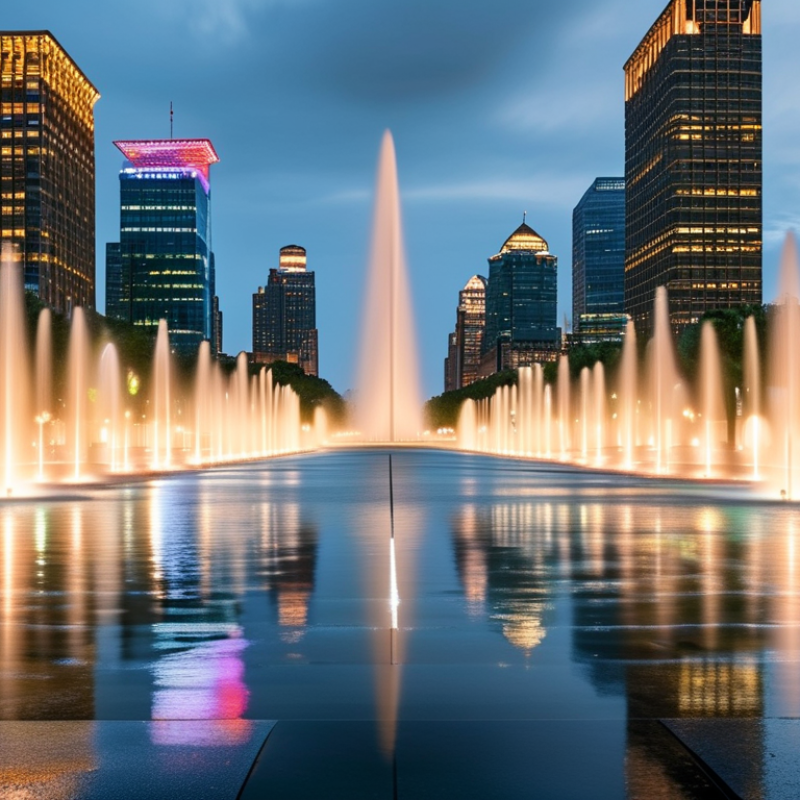
What Are the Best City Plaza Fountains from China?
A city plaza fountain is more than a decorative water display. It is public infrastructure that shapes movement, cooling, gathering, and local identity. China’s urbanization rate reached 66.16% at the end of 2023, according to China Statistical Yearbook 2024. This growth increases the need for welcoming, flexible public spaces. A well-designed fountain gives residents a visible meeting point. It also softens hard surfaces such as stone paving and concrete steps.
The best examples usually combine clear circulation with simple water effects. Low jets can create a safe play edge, while shallow basins reflect nearby trees and civic buildings. At noon, fine spray may reduce the uncomfortable heat near the plaza. However, cooling performance depends on wind, humidity, and maintenance. The China Water Resources Bulletin 2023 reported national water use of about 590.7 billion cubic meters. This figure makes water efficiency essential for public fountain planning. Designers should use recycled water, leakage sensors, timed operation, and covered underground tanks.
Details matter.
A reliable fountain needs slip-resistant paving, accessible routes, gentle edges, and readable safety signs. Operators must test water quality and inspect pumps regularly. In practice, some plazas still prioritize dramatic height over shade, seating, and repair access. That choice looks impressive but ages poorly. The strongest Chinese city plaza fountains are therefore not always the largest. They are the ones that remain comfortable, maintainable, and useful after the opening ceremony.
China’s strongest city plaza fountains treat water as public architecture, not simple decoration. Their best designs guide movement, frame landmarks, and create comfortable gathering spaces. In Xi’an, large musical fountains use broad pools, timed jets, and changing light to connect public space with local history. The effect feels ceremonial without becoming completely formal.
Scale matters. Low spray zones invite children and families, while taller jets create a memorable skyline. Designers often combine granite edges, shallow basins, programmable pumps, and energy-efficient lighting. Clear sightlines are essential because crowds quickly hide smaller details. Good plazas also provide dry walking routes, shaded seating, and slip-resistant paving. These practical features often matter more than dramatic height.
Climate and maintenance shape long-term quality. Dust, wind, winter freezing, and water loss can weaken an ambitious installation. A reliable fountain needs filtration, accessible service areas, and careful control of spray drift. Some projects appear impressive at opening but feel less convincing when lighting becomes uneven or several jets stop working. That is a useful warning. Beauty needs maintenance. The most notable fountains balance cultural storytelling with daily usability, allowing residents to enjoy them during ordinary evenings, not only during public events.
China’s leading plaza fountains combine civic identity, engineering, and everyday public life. Xi’an is widely recognized for its large musical fountain near the city’s historic core. Its broad water field creates strong visual rhythm, while synchronized lighting adds evening drama. The surrounding open space helps visitors watch from a distance without blocking pedestrian movement.
Dalian offers a different experience. Its coastal plazas often use lower, wider fountains that suit sea winds and spacious promenades. The design feels less ceremonial and more connected to outdoor leisure. Jinan, known for its springs, usually benefits from a stronger relationship between water, landscape, and local history. In this setting, modest jets and stone surfaces can feel more convincing than excessive height. Guangzhou and Shenzhen also present ambitious plaza displays, especially where fountains support commercial districts, public events, and night-time activity.
A professional evaluation should examine more than water height. Nozzle timing, drainage, slip resistance, maintenance access, and crowd visibility all matter. Small details matter. Well-calibrated lighting can make moving water look deep without becoming harsh. Yet some displays feel over-programmed, with loud music and repeated sequences reducing their charm. Water consumption and seasonal operation also deserve closer attention. A fountain may look impressive during an opening ceremony, but its long-term value depends on reliability, safety, and how naturally people use the surrounding plaza.
| City | Plaza and Fountain Setting | Fountain Format | Most Distinctive Features | Best Viewing Experience | Urban Context | Overall Appeal |
|---|---|---|---|---|---|---|
| Jinan | Quancheng Square, central Jinan | Musical and programmed fountain | Reflects Jinan’s reputation as the “City of Springs,” combining choreographed water displays with a large civic gathering space. | Open-air evening viewing and public celebrations | Located near major shopping streets, cultural sites, and historic spring attractions | ★★★★★ |
| Xi’an | North Square of the Giant Wild Goose Pagoda | Large musical fountain | Combines moving water, illumination, music, and the historic pagoda setting to create a highly recognizable city spectacle. | Evening performances, especially after sunset | Part of a major cultural and tourism district associated with Tang-era heritage | ★★★★★ |
| Qingdao | May Fourth Square waterfront | Waterfront musical fountain | Uses synchronized jets and lighting against Qingdao’s coastal skyline, with the distinctive red sculpture as a visual landmark. | Night viewing from the open waterfront promenade | Between the city center and Fushan Bay, with direct access to the seaside landscape | ★★★★★ |
| Dalian | Xinghai Square | Large public fountain and water display | Benefits from an expansive civic square, broad sightlines, and a strong relationship between water, open space, and the bay. | Summer evenings and waterfront walks | One of Dalian’s major public spaces, close to the coast and nearby cultural attractions | ★★★★☆ |
| Hangzhou | Wulin Square | Music, light, and water fountain | Provides a modern multimedia-style water display within one of Hangzhou’s busiest central commercial and transport areas. | Evening city-center visits and public events | Surrounded by shopping, hotels, offices, and access to the Grand Canal area | ★★★★☆ |
| Zhengzhou | Erqi Square | Civic plaza fountain | Pairs a public water feature with the historic Erqi Memorial Tower, creating a recognizable landmark composition in the city center. | Daytime sightseeing and illuminated evening views | Located in Zhengzhou’s central commercial district and connected to major pedestrian areas | ★★★★☆ |
| Guangzhou | Huacheng Square | Contemporary plaza water feature | Uses linear pools, jets, and reflective water surfaces to frame the modern skyline and the Canton Tower area. | Twilight and evening skyline photography | Set within the Pearl River New Town central business and cultural district | ★★★★☆ |
| Chengdu | Tianfu Square | Civic water feature and fountain zone | Water elements complement the square’s monumental layout and the large central sculpture, reinforcing its role as Chengdu’s civic heart. | Daytime urban sightseeing and event-related visits | Close to museums, cultural venues, government buildings, and the traditional city center | ★★★★☆ |
| Nanjing | Xinjiekou central public spaces | Urban decorative fountain | Offers a compact city-center water display integrated into one of China’s best-known commercial and pedestrian districts. | Evening shopping trips and street photography | Surrounded by retail streets, historic landmarks, restaurants, and dense public transport connections | ★★★☆☆ |
| Shenzhen | Civic Center and central public square area | Modern civic water installation | Emphasizes clean lines, open space, and contemporary architecture rather than a traditional monumental fountain form. | Late afternoon and evening visits when the civic buildings are illuminated | Located in the Futian central district near museums, libraries, and public cultural facilities | ★★★☆☆ |
Comparing city plaza fountains from China starts with scale, not spectacle. Measure basin length, viewing distance, water volume, and pedestrian flow. A large fountain may dominate an open square, while a compact installation can feel more intimate near a civic building. Ask for tested flow rates, pump redundancy, nozzle height, and operating hours. These figures reveal practical capacity. During site visits, I watch spray drift, paving splash, and sightlines from several corners. A beautiful center view is not enough.
Technology should support the scene, not become a technical exhibition. Variable-frequency pumps can adjust water movement and reduce waste during quieter periods. Programmable lighting, responsive controls, and filtration improve consistency when properly maintained. Request maintenance logs, control-system training, and replacement schedules. Remote monitoring sounds impressive. It still needs local staff. Check noise levels, electrical protection, drainage, and emergency shutoff procedures with qualified engineers. Compliance records and documented testing make comparisons more dependable.
Tips: Compare fountains at midday, dusk, and after busy events. Record videos from fixed points. Note wind, glare, pedestrian movement, and cleaning access. Ask who handles repairs. An elegant design may age poorly if filters clog weekly. I once favored dramatic jets, but later noticed their harsh noise near seating. That changed my scoring method. Use a simple table for scale, technology, upkeep, and visual comfort. Numbers cannot capture every public reaction.
This comparison uses a 0–100 evaluation scale for representative city-plaza fountain settings in China. Scale considers basin footprint and jet height, technology covers programmable control, lighting, music synchronization, and water-efficiency features, while visual appeal reflects choreography, nighttime presentation, and integration with the surrounding public space.
Choosing the best Chinese city plaza fountain requires more than an attractive daytime design. The fountain should fit the plaza’s scale, surrounding buildings, pedestrian flow, and local climate. In project reviews, I look for clear water circulation plans, corrosion-resistant materials, and reliable pumps. These details matter during humid summers, dusty seasons, and sudden temperature changes. A dramatic design can fail quickly without practical engineering.
Water quality deserves close attention. Filtration, drainage, and easy access to maintenance equipment reduce hygiene risks and operating delays. Splash height must also suit nearby walkways, electrical areas, and children’s activity zones. Non-slip paving is essential. So is quiet equipment, especially near offices, hotels, or residential buildings. Good lighting should reveal water movement without creating glare for drivers or surrounding apartments.
Energy use is another key factor. Variable-speed pumps and scheduled operating cycles can reduce unnecessary consumption. Digital controls may support music or lighting programs, but simple manual access remains valuable when systems fail. I would also examine maintenance records, spare-part availability, installation training, and emergency shutoff procedures. Local cultural references can strengthen the design, yet forced symbolism often looks artificial. A modest flaw in early planning is better than an expensive repair later. The best fountain is not merely impressive on opening day; it remains safe, serviceable, and visually balanced after years of public use.

