Why Choose a Lightning Alert Device?
Choosing a Lightning Alert Device is not about buying another flashing gadget. It is about gaining time before a storm reaches a worksite, sports field, farm, or marina. NOAA reports that lightning kills about 20 people annually in the United States and injures hundreds more. The National Weather Service warns that many victims are struck before heavy rain arrives. That detail matters. Blue skies can deceive. A quiet field can become dangerous quickly.
The World Meteorological Organization identifies lightning as a major weather hazard, although global casualty records remain incomplete. That uncertainty deserves honesty. Global totals are not perfectly measured. Still, the risk is real. Vaisala’s annual lightning reports have documented billions of lightning events worldwide, demonstrating the scale of electrical storm activity. A Lightning Alert Device may monitor electromagnetic signals, receive network alerts, or combine both methods. The best choice depends on coverage, warning speed, maintenance, and alarm clarity. More features do not automatically mean better protection.
Dr. Ronald L. Holle, a respected lightning-safety researcher, stated, “There is no safe place outside when thunderstorms are in the area.” His warning remains practical, not dramatic. A device cannot replace evacuation plans, trained staff, or weather awareness. It can, however, create valuable minutes. Sometimes, those minutes decide whether people leave a metal stand, lower a crane, or move indoors. The uncomfortable question is simple: will the alert be heard, understood, and acted upon? A dependable system should make that answer easier, though never perfect.
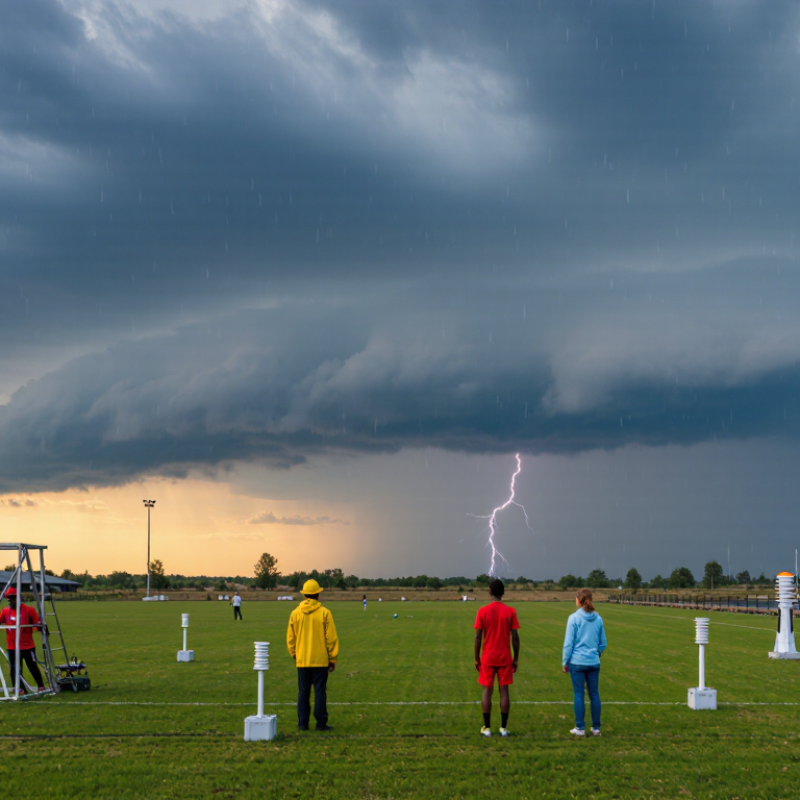
How Lightning Alert Devices Detect Nearby Storm Activity
Why Choose a Lightning Alert Device?
Lightning alert devices monitor electrical changes produced by nearby storms. Each lightning discharge releases a sharp electromagnetic pulse through the atmosphere. The device’s antenna detects that pulse and estimates its distance from the signal’s strength and timing. Some models also track repeated pulses, helping identify whether a storm is approaching or moving away.
On a practical afternoon, an alert may sound while dark clouds remain several miles away. A worker near an open field can then leave exposed equipment and seek a safer location. The warning is not a prediction of the exact strike point. It is an early signal that atmospheric conditions have become dangerous. Experienced users compare the alert with official weather updates, visible cloud growth, and changing wind.
Distance estimates are not perfect. Mountains, buildings, electrical interference, and weak discharges can affect readings. False alerts happen. So do missed detections. Regular testing, correct placement, and fresh batteries improve dependable operation. The unit should remain away from large metal objects and strong radio sources when possible. Users should also understand the device’s detection range before trusting it outdoors. It is a useful layer of awareness, not a replacement for established lightning safety procedures.
Where Lightning Alert Devices Are Most Useful
Lightning alert devices are most useful where people cannot quickly reach shelter. Outdoor sports fields, golf courses, swimming areas, and school grounds are common examples. A visible or audible warning can reach coaches, staff, and visitors during sudden weather changes. That warning matters. People may notice dark clouds, yet lightning can travel far beyond rainfall.
Construction sites also benefit from dedicated alerts. Workers often handle metal equipment, climb structures, or operate in open spaces. A timely signal can support a planned pause and help supervisors move crews indoors. Farms, marinas, campsites, and outdoor event areas face similar exposure. Their workers and guests may be spread across large distances, making verbal warnings unreliable. Placement matters. Devices should be easy to see or hear, especially near noisy machinery.
In practice, an alert device works best with weather monitoring, clear shelter routes, and trained staff. It should never replace a safety plan or official weather information. Regular testing is important because dust, weak batteries, and poor installation can reduce reliability. No device is perfect. Some alerts may arrive late, or people may ignore them after repeated warnings. That weakness deserves attention. Short drills can show whether everyone understands the signal and knows where to go. A device near the main office may not help workers at the far end of a field. Coverage should be checked from real working positions, not only from a map.
Factors to Consider Before Choosing a Lightning Alert Device
Choosing a lightning alert device requires more than checking its advertised range. Start with detection accuracy, alert speed, and coverage for your actual location. A coastal campsite, sports field, and construction site may need different solutions. Reliable devices should explain their detection method clearly and identify how weather data is verified.
Consider the warning format. A loud siren helps outdoors, while vibration or phone notifications suit indoor teams. Test the alert near machinery, trees, and concrete walls. Signal strength can change quickly. Battery life also matters during long events, especially when charging access is limited. I would choose replaceable batteries for remote use, although they require regular checks. No device is perfect.
Look for clear maintenance instructions and a record of independent testing. Weather resistance should match your environment, not just an attractive product description. Check whether the device supports adjustable warning distances and separate alerts for approaching and nearby lightning. False alarms can cause people to ignore future warnings, so accuracy matters as much as sensitivity. Keep official weather services as a second source. A device should support trained decisions, not replace them. Review privacy settings if alerts use location data. The best choice is practical, understandable, and tested before people depend on it.
Why Choose a Lightning Alert Device?
Factors to consider include detection range, alert speed, outdoor visibility, audible warnings, false-alarm filtering, and reliable power during severe weather.
The chart shows the approximate delay between seeing a lightning flash and hearing thunder at different distances, calculated using an average sound speed of 343 meters per second at 20°C. A suitable alert device should detect lightning faster than sound travels and provide enough range for people to reach a safe indoor location.