OPEN FROM 9AM TO 5PM – CLOSED ON WEEKENDS

2026 Best Ideal Paint Booth Type for Global Buyers

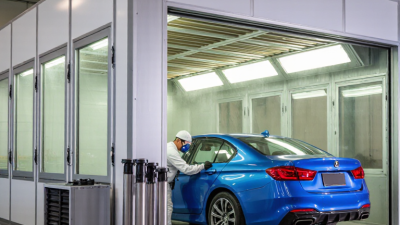
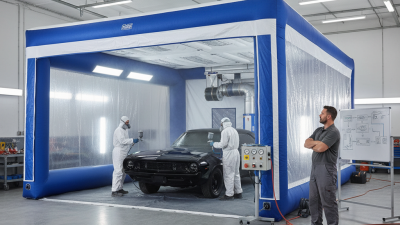
Choosing the 2026 best ideal paint booth is no longer a simple equipment purchase. Global buyers must balance airflow, energy use, coating quality, worker protection, and local installation conditions.

Grand View Research and MarketsandMarkets both identify steady growth in paint booth demand, driven by automotive, aerospace, furniture, and industrial manufacturing. Their market analyses also highlight automation, filtration efficiency, and lower emissions as major purchasing trends. However, market definitions differ. That weakness deserves attention.

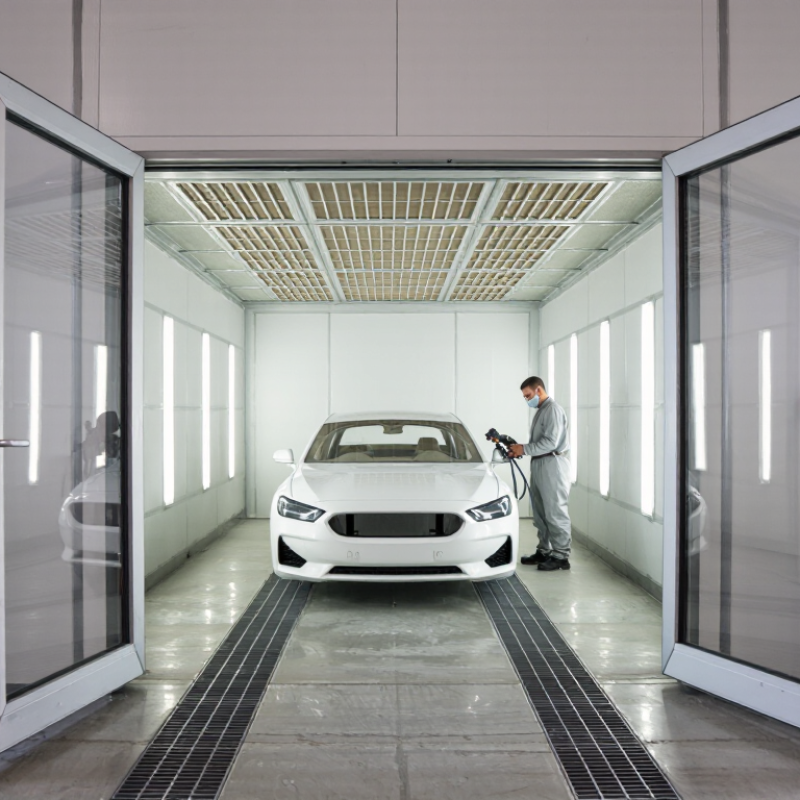
A booth that performs well in Germany may struggle in Thailand’s humidity or Mexico’s dust. Consider a clean transfer room, a visible pressure gauge, and filters that technicians can replace safely. Energy recovery may reduce operating costs, but only when maintenance remains consistent. A sophisticated system can still underperform.

Safety expert James Reason wrote, “We cannot change the human condition, but we can change the conditions under which humans work.” His principle applies directly to paint finishing. A reliable ideal paint booth should make correct work easier, not merely satisfy a specification sheet.

This 2026 guide compares crossdraft, downdraft, side-downdraft, open-face, and enclosed designs. It examines airflow patterns, capture efficiency, filtration, curing performance, service access, and total ownership cost. It also considers practical buyer experience, because installation delays and unavailable replacement filters can damage a project quickly.

There is no universal winner. The best choice depends on production volume, coating type, product dimensions, climate, facility layout, and compliance requirements. That is the uncomfortable part. A cheaper booth may become the expensive option later.
2026 Best Ideal Paint Booth Type for Global Buyers

What Is an Ideal Paint Booth for Global Buyers in 2026?

What is an ideal paint booth for global buyers in 2026? It is not simply the largest or most automated model. It should match the product size, coating process, climate, labor skills, and local safety requirements. Grand View Research estimates the global paint booth market will grow at about 4.8% annually from 2024 to 2030. This growth reflects demand for safer airflow, cleaner finishes, and lower energy consumption.

For many workshops, a downdraft booth with variable-speed fans offers stable airflow and fewer dust defects. A crossdraft booth may cost less and suit smaller parts. For high-volume facilities, heat recovery, LED lighting, filter-pressure monitoring, and programmable curing controls can reduce operating waste. The U.S. National Fire Protection Association’s NFPA 33 standard and OSHA ventilation guidance remain useful technical references, but buyers must also verify national electrical, fire, and environmental rules. Compliance cannot be added casually after installation.

From practical evaluations, I would inspect airflow at the operator’s breathing zone, not only the brochure’s rated capacity. The floor should be easy to clean. Filters should be available locally. A 20-centimeter pressure difference can signal a blocked filter and uneven coating. Small details matter. Fortune Business Insights also reports continued automotive paint booth growth above 4% annually, supporting investment in efficient systems. Still, automation is not always ideal. If technicians lack training, complex controls may increase downtime. The better choice is a booth that remains safe, serviceable, and measurable under real working conditions.

2026 Best Ideal Paint Booth Type for Global Buyers

Downdraft booths are the strongest choice for buyers prioritizing premium finish quality and contaminant control. Semi-downdraft booths provide a practical balance between finish performance, installation requirements, and investment, while crossdraft and side-draft designs are commonly selected when budget, retrofit flexibility, or workshop constraints are the main considerations. The ratings are planning benchmarks based on airflow control, finish quality, installation complexity, operating efficiency, and suitability for international projects.

How to Compare Paint Booth Types by Application and Workload

2026 Best Ideal Paint Booth Type for Global Buyers

How to Compare Paint Booth Types by Application and Workload

Choosing a paint booth starts with the workpiece, not the catalog description. A vehicle door needs different airflow than a small metal cabinet. For vehicle refinishing, downdraft booths often provide cleaner surfaces by pulling overspray downward. Crossdraft designs can suit controlled budgets and moderate workloads. However, airflow quality depends on filter maintenance, fan balance, and booth sealing.

Workload changes the decision. A repair shop handling three cars daily may need flexible drying and quick color changes. A factory coating hundreds of parts needs stable airflow, durable filters, and predictable cycle times. Dry-filter booths can simplify color changes and routine service. Water-wash systems may handle heavier overspray, but they require water treatment and closer process control. Measure booth loading carefully. A large booth can waste energy when used for small parts.

Practical evaluation should include part size, coating type, operator movement, and daily production hours. Check temperature control, lighting, access doors, noise, and replacement-filter availability. Local fire, ventilation, and emissions requirements must guide the final design. I have seen buyers focus on purchase price and overlook installation power demand. That decision often becomes expensive later. A booth may look ideal on paper, yet perform poorly when filters clog or workloads change. Test the proposed airflow with real parts whenever possible. Small trials reveal uncomfortable truths.

Which Paint Booth Features Affect Safety, Quality, and Efficiency?

2026 Best Ideal Paint Booth Type for Global Buyers

Safety begins with controlled airflow, not a larger fan. OSHA 29 CFR 1910.107 uses 100 feet per minute as a benchmark for open-front spray booths. NFPA 33 also emphasizes ventilation, grounding, fire protection, and interlocked equipment. These details matter when solvent vapors gather near lamps, motors, or filter housings. A booth should stop spraying when airflow drops. Simple, but often overlooked. Global buyers must still verify local electrical and fire requirements, because NFPA guidance is not universal law.

Quality depends on stability. Even lighting reveals dry spots, orange peel, and uneven coverage before shipment. Accurate temperature and humidity sensors reduce coating variation, while clean intake filters protect the finish from dust. Efficiency needs equal attention. The U.S. Department of Energy’s Improving Compressed Air System Performance guide estimates that leaks can waste 20–30% of compressor output. Pneumatic doors and paint systems therefore need leak checks, not just higher pressure. Variable-speed exhaust fans can reduce energy use during suitable operating periods, although poor control settings may harm airflow. This is where many purchasing guides oversimplify. The cheapest booth may consume more power, replace filters sooner, and create rework. A practical evaluation should compare airflow records, filter loading, lighting levels, interlock tests, and measured energy use before approval.

How to Evaluate Energy Use, Compliance, and Operating Costs

2026 Best Ideal Paint Booth Type for Global Buyers

Choosing a paint booth should begin with energy data, not appearance. A downdraft booth may capture overspray efficiently, but its larger airflow demand can increase fan electricity costs. Crossdraft designs may use less energy, yet they can require more cleaning and produce uneven finishing in some applications. Request measured airflow, motor power, filter pressure, and heat recovery data under real operating conditions. Paper estimates can mislead.

Compliance varies by destination and application. Check local rules for exhaust height, volatile organic compound control, fire protection, electrical classification, worker exposure, and waste handling. A booth that meets one country’s requirements may need redesign elsewhere. Ask for test records, maintenance instructions, emergency shutdown details, and clearly identified responsibility for final approval. Regulations are not always simple.

Tips

Calculate total ownership cost over five years. Include electricity, filters, heating fuel, labor, downtime, inspections, and disposal. Compare energy use during spraying, curing, standby, and winter operation. Use a temporary power meter when possible. Keep airflow stable; clogged filters make fans work harder and can damage finish quality. Automation helps, but it is not a cure for poor maintenance. A cheaper booth can become expensive quickly. Recheck assumptions.

2026 Best Ideal Paint Booth Type for Global Buyers - How to Evaluate Energy Use, Compliance, and Operating Costs

Paint Booth Type Typical Applications Typical Airflow Range Typical Fan Motor Range Estimated Fan Electricity Use Relative Energy Efficiency Filtration and Maintenance Compliance Considerations Indicative Operating Cost Best Fit for Global Buyers
Open-Face Booth
★★★☆☆
Small parts, furniture, touch-up work, manual coating, and low-to-medium production volumes. 15,000–40,000 m³/h
8,800–23,500 cfm
5.5–15 kW 11–30 MWh/year Low to moderate. It has a simple airflow path, but the open front can increase conditioned-air loss and overspray exposure. Usually uses disposable intake or exhaust filters. Filter loading should be monitored because pressure loss increases fan energy. Requires guarded airflow, exhaust discharge, fire protection, grounding, and hazardous-area controls where applicable. Local fire, worker-safety, and VOC rules must be checked. Approximately US$1,320–3,600/year
Electricity only at US$0.12/kWh
Suitable where initial investment and simple installation are more important than maximum finish quality or energy optimization.
Crossdraft Booth
★★★☆☆
General industrial parts, commercial vehicles, metal components, and medium-volume production. 20,000–60,000 m³/h
11,800–35,300 cfm
7.5–22 kW 15–44 MWh/year Moderate. The layout is relatively simple, but airflow travels horizontally across the workpiece and may require higher airflow to maintain uniform capture. Exhaust filters are normally replaced according to pressure drop and coating load. Filter access should be designed for safe and frequent servicing. Common compliance items include mechanical ventilation, spray-area construction, ignition-source control, fire suppression or extinguishing provisions, and compliant exhaust discharge. Approximately US$1,800–5,280/year
Electricity only at US$0.12/kWh
A practical choice for buyers needing a balanced combination of moderate capital cost, accessible maintenance, and acceptable finish quality.
Sidedraft Booth
★★★★☆
Automotive refinishing, larger components, industrial equipment, and applications requiring improved operator visibility. 25,000–70,000 m³/h
14,700–41,200 cfm
11–30 kW 22–60 MWh/year Moderate to high. Air is drawn toward side exhaust plenums, which can provide more consistent capture than a basic crossdraft arrangement. Side-wall exhaust filters and plenums require regular inspection. Uneven loading can indicate blocked filters, poor balancing, or incorrect workpiece positioning. Design review should cover airflow balance, fire-resistant construction, electrical classification, combustible-residue control, VOC emissions, and local exhaust requirements. Approximately US$2,640–7,200/year
Electricity only at US$0.12/kWh
Well suited to medium and large workpieces where finish consistency and operator access are more important than the lowest purchase price.
Downdraft Booth
★★★★★
High-quality automotive refinishing, aircraft components, premium industrial finishing, and applications with strict surface-quality requirements. 30,000–80,000 m³/h
17,700–47,100 cfm
15–37 kW 30–74 MWh/year High for finish quality, but usually higher fan energy. Air moves vertically downward, helping reduce overspray around the operator and workpiece. Floor filters, exhaust pits, or underfloor filter chambers require planned access and replacement. Pressure-drop monitoring is essential for energy control. Often requires detailed fire-safety engineering, compliant exhaust design, interlocked spray and ventilation controls, grounding, and documentation for the destination country. Approximately US$3,600–8,880/year
Electricity only at US$0.12/kWh
The preferred option when finish quality, overspray control, and repeatability justify higher capital and ventilation costs.
Water-Wash Booth
★★★★☆
High-overspray industrial coating, continuous production, large components, and operations seeking reduced dry-filter loading. 25,000–70,000 m³/h
14,700–41,200 cfm
15–45 kW
plus pump power
30–90 MWh/year
plus water-treatment energy
Moderate to high. Water capture can reduce some dry-filter waste, but pumps, sludge handling, water treatment, and ventilation add operating loads. Requires water chemistry control, sludge removal, pump inspection, corrosion management, and regular cleaning of the wet collector and exhaust path. May require wastewater or sludge-management approval in addition to ventilation, fire, VOC, chemical-handling, and electrical-safety compliance. Approximately US$3,600–10,800/year
Fan electricity only; excludes water, treatment, pumps, sludge, and labor
Best for high overspray volumes where wet collection can reduce dry-filter consumption and support continuous production.
Recirculating or Heat-Recovery Booth
★★★★☆
Temperature-sensitive finishing, cold climates, and facilities where heating or cooling make-up air is a major operating expense. Project-specific
typically 20,000–70,000 m³/h
Variable-speed fans
typically 11–37 kW
22–74 MWh/year
fan energy only
Potentially high at facility level because heat recovery or controlled recirculation can reduce make-up-air heating demand. It is not automatically lower-energy than a once-through booth. Requires reliable particulate and VOC filtration, sensor calibration, airflow monitoring, and documented safeguards against contaminant accumulation. Recirculation must be permitted and engineered for the coating chemistry. Combustible vapor concentration controls, interlocks, exhaust purge cycles, and local authority approval may be required. Fan cost: approximately US$2,640–8,880/year
Potential HVAC savings require a site-specific calculation
Suitable for buyers in cold or hot climates with high make-up-air costs and sufficient technical capability for controls and compliance management.
Evaluation assumptions: The electricity estimates use 2,000 operating hours per year and a reference electricity price of US$0.12/kWh. Fan-motor ranges are indicative engineering values for industrial booths and vary with booth dimensions, face velocity, filter resistance, duct length, altitude, and required pressure. Heating, cooling, compressed air, lighting, water treatment, labor, consumables, and scheduled maintenance are excluded unless specifically stated.
Compliance note: No booth type is automatically compliant in every market. Global buyers should verify the complete system against the destination country's fire, worker-safety, VOC-emission, electrical, machinery, environmental, and hazardous-area requirements. Common reference frameworks include OSHA ventilation requirements in the United States, NFPA 33 principles for spray application using flammable or combustible materials, EN 12215 requirements for spray booths in applicable European projects, and ATEX requirements where explosive atmospheres may be present.

How to Choose the Right Paint Booth Supplier and Configuration

Choosing the right paint booth supplier starts with your process, not the catalog. Grand View Research’s 2024 Paint Booth Market report projects global growth of about 4.7% annually through 2030. That growth reflects stricter quality demands and wider industrial use.

Define the workpiece size, coating type, daily volume, and local fire code. For large panels, a downdraft booth can reduce overspray near finished surfaces. Crossdraft designs may cost less, but airflow can carry contaminants across the coating path. NFPA 33 specifies 100 feet per minute as a reference minimum for many open-face spray booths. Your engineer must confirm the correct application.

Ask suppliers for measured airflow, filter-loading data, fan curves, and electrical classifications. Request drawings showing access doors, lighting, exhaust routes, and maintenance clearance. A reliable supplier should explain how the booth handles solvent-based or waterborne coatings. They should also provide commissioning records and operator training.

Do not compare price alone. A cheaper booth may use smaller fans, thin panels, or difficult-to-source filters. That can increase downtime. I have seen specifications look complete while ignoring cleaning access. That mistake is expensive. Verify after-sales response times, spare-part availability, and documented compliance with applicable standards. An independent airflow test before final payment is wise, though many buyers overlook it.

Amet mattis vulputate enim nulla aliquet. Id porta nibh venenatis cras sed felis dictumst vestibulum rhoncus est.
This error message is only visible to WordPress admins

Error: No feed found.

Please go to the Instagram Feed settings page to create a feed.

Quick links